Tufts Digital Health Research Group

Interview Study

IRB approved interview study to understand home medication practices among older adults.

Overview

Medication adherence—defined as taking medication as prescribed—is a crucial part of aging well. Studies have shown that 50% or more of U.S. adults do not take their prescriptions as directed, and that medication nonadherence is responsible for as many as 33%-69% of hospital admissions and 125,000 deaths annually. Medication adherence often relies on the development of a medication management routine with habit formation as one of the main determinants of behavior change. Habit formation specific to medication is understudied. We conducted a survey and interview study to explore how older adults manage their medication in their homes.

Time

1 year


Role

Researcher


Team

1 principle investigator, 2 researchers


Client

Tufts Digital Health Research Group

Medication adherence—defined as taking medication as prescribed—is a crucial part of aging well. However, 50% or more of U.S. adults do not take their prescriptions as directed, and medication nonadherence is responsible for as many as 33%-69% of hospital admissions and 125,000 deaths annually. The World Health Organization (WHO) emphasizes the importance of medication adherence, stating that, “Increasing the effectiveness of adherence interventions may have a far greater impact on the health of the population than any improvement in specific medical treatment.” There are many factors that contribute to non-adherence, such as financial barriers in purchasing medications, lack of access to healthcare, and lack of physician-patient trust. 

Narrowing down the addressable problem & patient population

Although more medications are taken at home than in hospitals and clinics combined, the impact of home medication management on medication adherence is understudied. In addition, medication adherence concern is greatest for older adults since 67% of U.S. adults 45-64 take at least one prescription drug, rising to 88.5% for those 65 and older. Older adults may also view health in general and medication adherence in particular as an important component of aging in place. For these reasons, we chose to focus on effective home medication management strategies and habit formation in relation to adherence among older adults

Medication adherence—defined as taking medication as prescribed—is a crucial part of aging well. However, 50% or more of U.S. adults do not take their prescriptions as directed, and medication nonadherence is responsible for as many as 33%-69% of hospital admissions and 125,000 deaths annually. The World Health Organization (WHO) emphasizes the importance of medication adherence, stating that, “Increasing the effectiveness of adherence interventions may have a far greater impact on the health of the population than any improvement in specific medical treatment.” There are many factors that contribute to non-adherence, such as financial barriers in purchasing medications, lack of access to healthcare, and lack of physician-patient trust. 

Narrowing down the addressable problem & patient population

Although more medications are taken at home than in hospitals and clinics combined, the impact of home medication management on medication adherence is understudied. In addition, medication adherence concern is greatest for older adults since 67% of U.S. adults 45-64 take at least one prescription drug, rising to 88.5% for those 65 and older. Older adults may also view health in general and medication adherence in particular as an important component of aging in place. For these reasons, we chose to focus on effective home medication management strategies and habit formation in relation to adherence among older adults

PROBLEM

Pilot Display & Controls for 3 Key Mission Phases

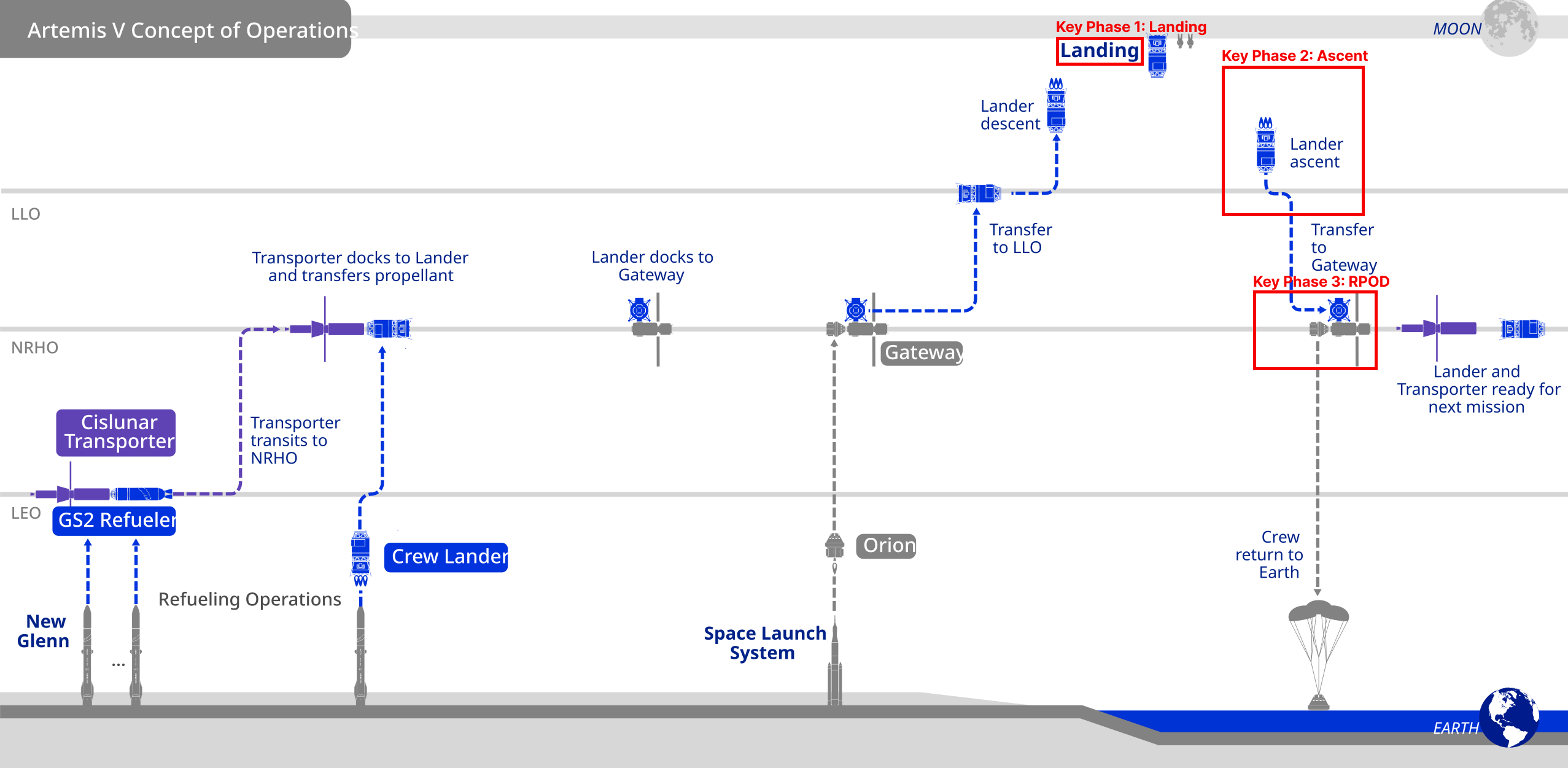
There are 3 key phases of the Artemis V mission that need pilot interaction on the MK2 lunar lander. How do we design and test pilot display and controls during these 3 phases to optimize pilot performance?

1) Landing

Descending to the lunar surface

2) Ascent

Ascending from the lunar surface to return to Gateway

3) RPOD (Rendezvous, Proximity Operations, and Docking)

Approaching and docking at Gateway space station in lunar orbit

Team Goal

Our team was tasked with designing the display & controls for each key mission phase. These designs, along with the underlying models and guidance algorithms are then implemented in a human-in-the-loop simulation and evaluated for pilot and system performance and vehicle handling qualities.


What Did I Do?

ONBOARDING

Learning about Aerospace & Aviation

How do I quickly learn about basic aerospace and aviation concepts?


‍This was my first time working on an aerospace control & display project so I had a lot to learn to even understand the problem space! Below are some notes I took about key aviation and aerospace concepts that I found helpful during my onboarding process:
RESEARCH

Research Questions

How do I tackle the daunting task of designing ascent screens?


In order to break down the larger task of designing ascent screens, I came up with a list of questions that I needed to answer before I started creating designs:

1) What is the current mission conops? How does ascent fit into the larger mission timeline?
2) Define the ascent phase. When does it start and end?
3) How is the ascent and descent process different?
4) What are the sub-phases within ascent?
5) What features are necessary for auto vs. manual control during ascent?
6) What features are needed on each piloting screen (i.e. PFD, VNAV, Orbit View) for each phase of ascent?

Desk Research

What can I learn about ascent from internal and public archives?


To answer my questions, I first did as much desk research as I could. I dived into Draper's internal archives about heritage ascent display designs and the Artemis V concept of operations (conops). I also looked into publicly available information about aviation displays and ascent in general.

Subject Matter Expert Interviews

With the remaining questions I had after desk research, what can I learn from the SMEs around me?


After desk research, I interviewed Draper's internal Subject Matter Experts to learn more about ascent + aviation! Special thanks to the following people:

Phil Hattis

Working on manual spaceflight systems for 50 years

John Nafziger

Active pilot

Thomas Fill

16 years supporting Shuttle ascent & real-time flight support on Orion

DESIGN

Feature Prioritization

There are so many features we can design. Which ones should we prioritize and implement for our upcoming pilot evaluation with Blue Origin's test pilot team?


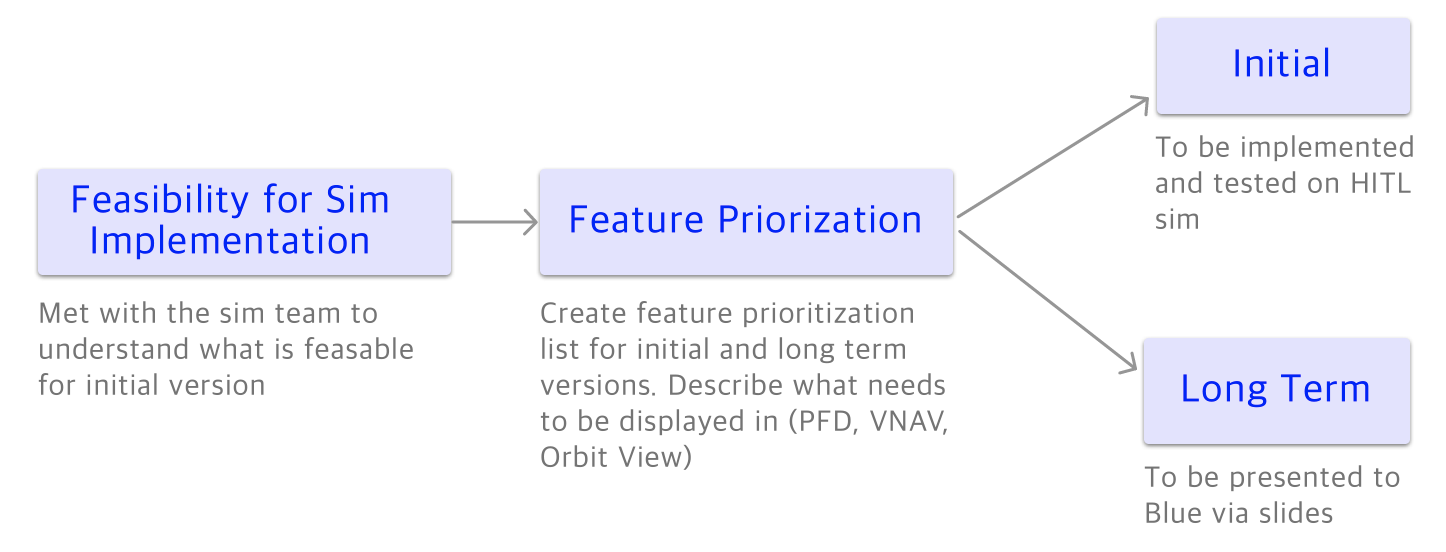
In order to plan for piloting evaluations, we needed to understand and prioritize what the simulation team could feasibly implement given the project timeline. After a meeting with the simulation team, I created a feature prioritization list for the initial version and a long term version. The initial version would be tested with pilots on the flight simulator and the long term version would be presented as slides.

Design Process

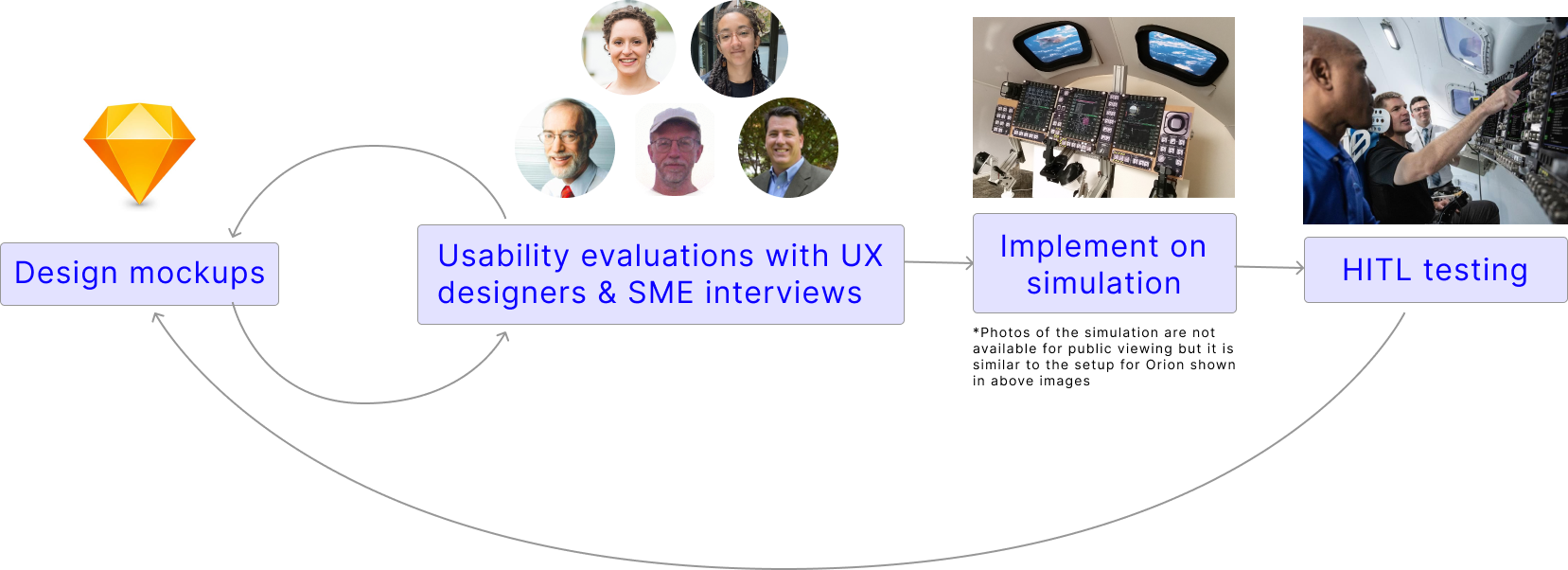
How did I use usability evaluations, SME interviews, and HITL testing to inform my designs and optimize pilot performance?


After creating a feature prioritization list, I created design mockups in Sketch which was then implemented on the flight simulator. Design was an iterative process where I received feedback from my design mentors, internal SMEs, and eventually from pilots via HITL testing.

Final Design Concept

What did the final design look like?


Although my mockups are not available for public viewing, here is the general design concept:

Image of PFD on Space Shuttle

SCREEN #1

PFD (Primary Flight Display)

○ Pilot's primary reference for flight information

SCREEN #2

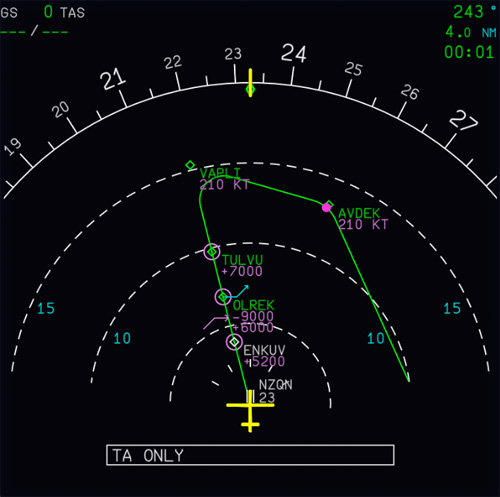
VNAV (Vertical Navigation Display)

○ Provides situational awareness of vertical navigation performance

image of VNAV from FlyByWire Simulations

image from the game Space Simulator (orbit view in top right corner)

SCREEN #3

Orbit View

○ Helps pilot navigate to the planned orbit

USABILITY TESTING

Experience of obtaining medication (initiation)

FINDING #1

Lack of guidance on how to manage medications

Of 22 participants, over half (13) used trial and error to find their current adherence strategy; 5 participants used previous experience of helping someone else manage their medication and 4 received suggestions from a friend or family member. No participants received guidance from a medical professional about how to devise an effective medication management practice, such as where to put, how to store, or how to develop a routine around taking their prescription medications.

Implication: This lack of guidance from medical professionals presents a missed opportunity to increase medication adherence, especially with the low adherence rate in the US.

FINDING #2

Increasing mail orders and 90-day supplies 

Two thirds of participants had prescriptions delivered by mail and almost all [21/22] received a 90-day supply of medication. 

Implication: Mail order further limits opportunities for pharmacist guidance, such as how to correctly take medications, or patients to ask questions. This is further compounded by almost all participants receiving a 90-day supply.


Experience taking medication at home (implementation)

FINDING #1

Great variance in medication management

No two participants had a medication management routine that was exactly the same. This was despite some participants using similar adherence devices or taking medication at similar times. For participants who used a pill case, there was great variety in when they refilled their pill case; where they stored their pill case; and how they remembered to take their medication. For other participants, they developed unique, complex routines that included tactile triggers. One participant flipped her pill bottles and moved it across the microwave to keep track of their adherence.

Implication: Medication management is complex and is developed to fit a unique daily routine and person. What works for one person may not work well for another. 

"I came up with a scheme, where I keep the medicines on one side of my microwave, or my toaster oven. When I take it, I put it on the other side."
– Participant 4

FINDING #2

Pill case was the most popular adherence device 

Majority of participants[17/22] used a pill case.

Implication: Weekly pill cases may be popular because they provide direct feedback on whether or not someone took their medication using visual cues.

FINDING #2

Reliance on multiple triggers to remember to take medications 

For this study, we define adherence triggers as actions that are taken or objects that are encountered that help patients remember to take their medication. All (100%) participants relied on at least two triggers to remind them to take their medication, while 68% relied on three or more. Action triggers included eating a meal (50%) and getting ready for bed (25%); object triggers included a pill case (77%) and a water glass (18%). One participant who relied on three triggers – taking medication with a meal, using a pill case, and placing it on the dining table –  missed the first trigger but saw their pill case which acted as a fall back reminder.

Implication: Under some circumstances, multiple triggers served as “a safety net,” providing different avenues for medication reminders. How can we leverage this to improve adherence routines?


Underlying reasons for non-adherent behavior (persistence)

FINDING #1

Change of routine was the greatest contributor to non-adherence

The most common reason for non-adherence among participants was a change of routine[13/22], which caused an absence of a specific trigger. For example, one participant who relies on breakfast as a trigger forgets to take her medication when she skips breakfast:

Implication: Implication: How can we make an adherence strategy durable under a change in daily routine?

"If I have to go somewhere, first thing in the morning, that's a typical time when I forget. Because sometimes I don't even have time for breakfast or for one reason or another didn't get around to it. Then the next day, it's Monday, but I'm looking at the Sunday case saying, ‘Oh, I guess I forgot to take it yesterday.’ " –Participant 7

Conclusions

All participants in our study did not receive guidance from a healthcare professional about how to manage their medication or develop an adherence strategy. Given that we know many patients struggle with adherence, there may be value in guiding patients to develop an effective adherence strategy or recommend changes to make their current strategy stronger. Secondly, people develop unique – and sometimes surprisingly complex – routines to remember to take medication. For example, participants relied on multiple action and object triggers to remember to take their medication. Participants also became less adherent during the absence of usual triggers such as a change of routine. We hope to further probe what makes a trigger durable under disruptions to routines; if multiple, durable triggers lead to greater adherence; and how to guide older adults in developing a more successful medication strategy. Lastly, time-based reminders are the most common reminder mechanism in consumer medication management apps and devices, but few study participants reported using them or taking their medication at an exact time, instead relying on routines and time ranges. Medication nonadherence is a growing problem, which reminders can potentially mitigate. Our results highlight the need for research outside of time-based reminders, such as routine-based reminders, to increase medication adherence. While a small sample, the analysis suggests that there are opportunities to provide guidance to older adults in developing an adherence strategy and design better aids to adherence that leverage established daily routines.

Co-design activities

We had two co-design activities. The first revolved around understanding the overall patient experience from being prescribed a medication to adhering to their medication and identifying pain points along the way. The second focused on blue sky ideations about possible solutions addressing those pain points.

Activity 1: User Journey Map & Pain Points

Activity 2: Blue sky ideations

Pilot Evaluations

How did I test my designs?


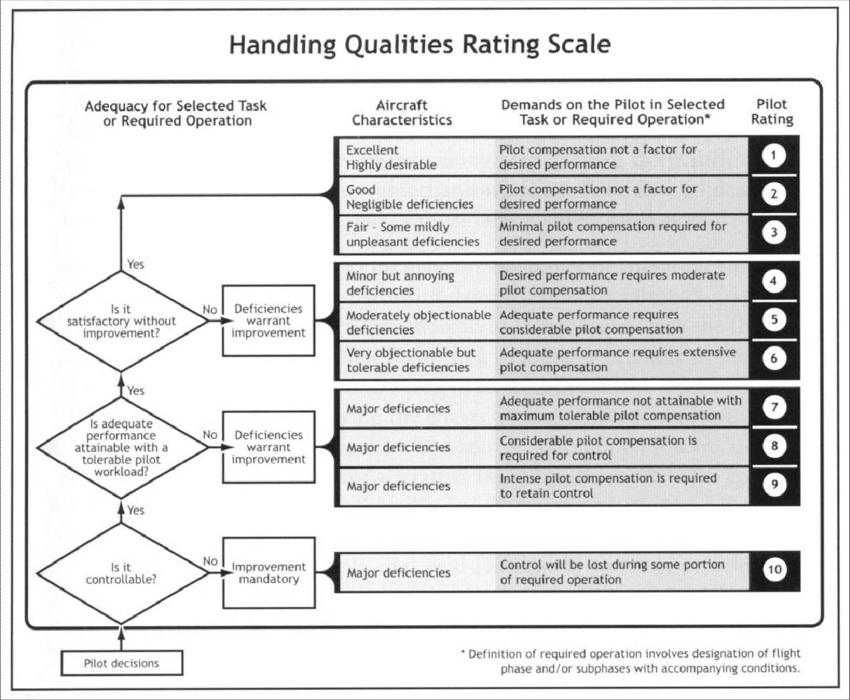
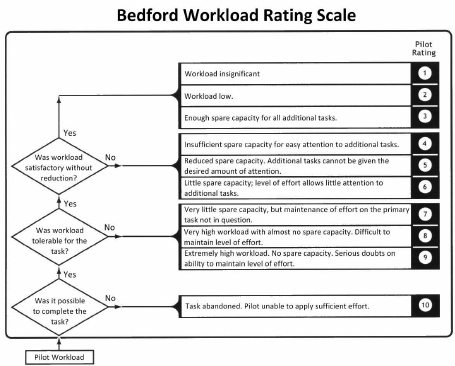
Pilot evaluations took place in the span of 4 days. I helped run testing for landing, ascent, and RPOD in the lab by moderating and taking notes. Test pilots were debriefed/ trained beforehand. I collected data on workload using the Bedford workload scale and handling qualities using the Cooper-Harper Rating Scale after each run. After a pilot went through all their runs for a phase (landing, ascent, or landing), I helped conduct a debrief interview.

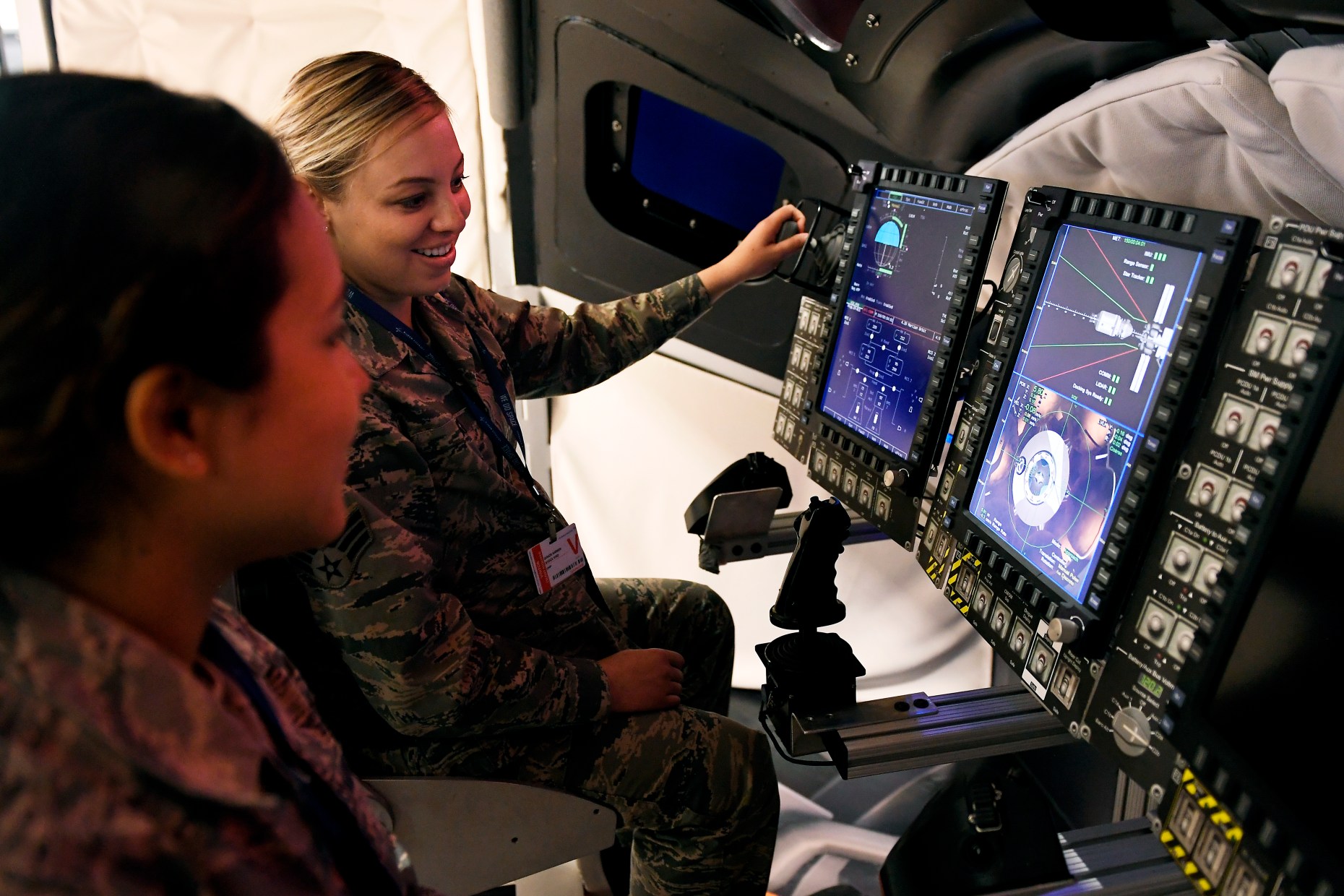
image of Orion cockpit simulation setup

HITL Simulation Setup

○ The simulation setup is not available for public viewing but it was similar to the Orion cockpit w/ windows, display panels, and hand controllers
○ Test pilots wore eye tracking glasses

Measuring Handling Qualities

○ We used the Cooper-Harper Rating Scale to measure vehicle handling qualities after each simulation run

Measuring Pilot Workload

○ We used the Bedford Workload Scale to measure pilot workload after each simulation run

Ascent Presentation to Test Pilot Team

○ After the test pilot team completed their ascent runs, I presented and facilitated a discussion on the long term ascent designs. I received feedback on my designs, which informed my next design iteration.  

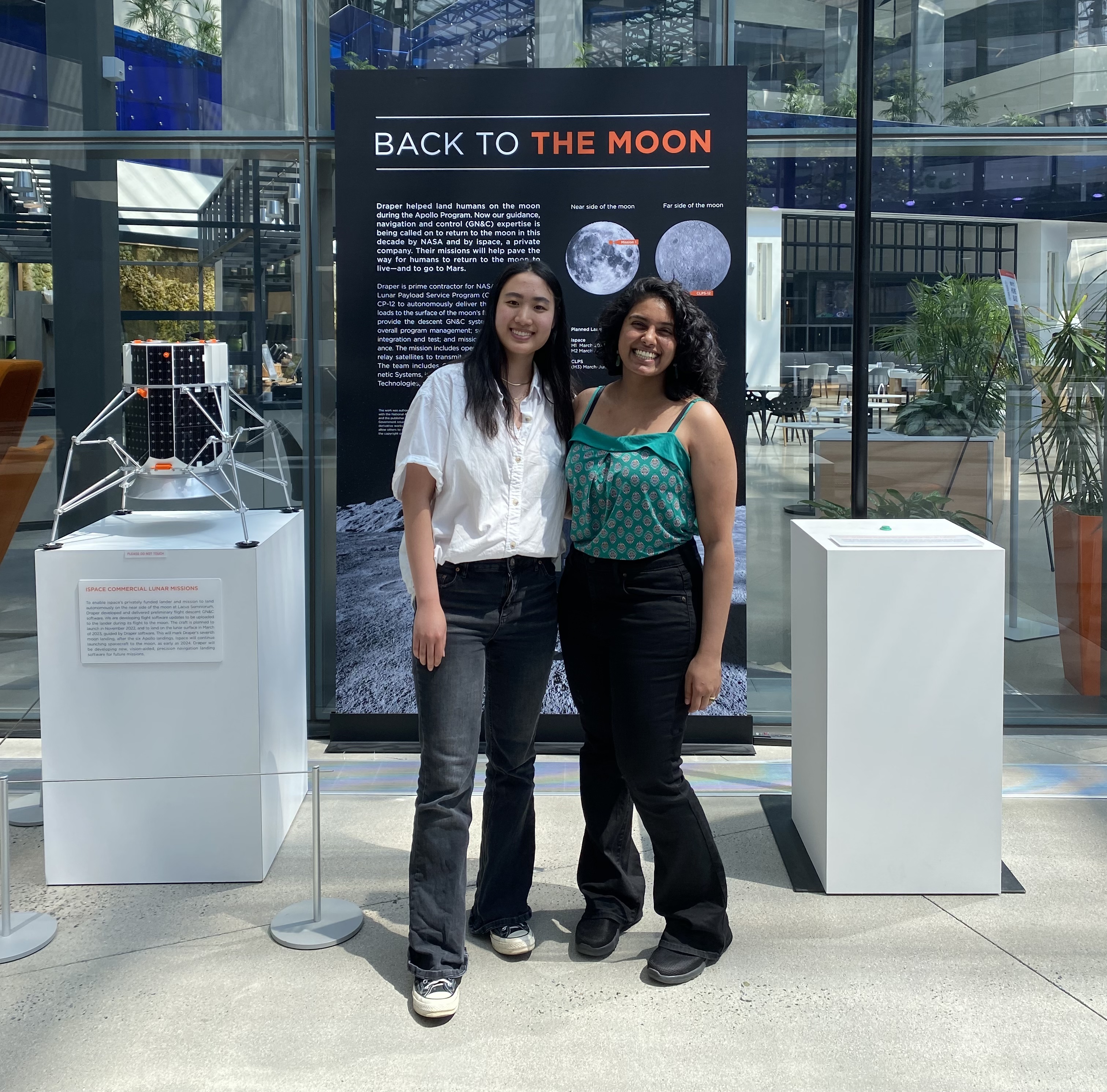
Me and my colleague in the Draper atrium

Handling Qualities Report & Design Iteration

How did I synthesize and take action on results from Pilot Evaluation?

Handling Qualities Report

I synthesized qualitative and quantitative findings for ascent and created a list of design recommendations for our next design iteration. My analysis was included in a Handling Qualities report that was given to Blue.

Design Iteration

I mocked-up potential design changes based on the handling qualities report. I also created an ascent handoff documentation describing each design component, rationale for the component, and a traceback to a HITL or SME interview that justified my design decisions.
REFLECTIONS

Takeaways

TAKEAWAY #1

Learning how to work in a research setting

This was my first time working in a research setting. While I have done interviews in the past for design projects, this was my first time working on an interview study that was irb approved. I learned how to present our findings with scientific integrity and accuracy, learning to be critical of the strengths and weaknesses in our study and being rigorous about my writing. 

TAKEAWAY #2

Value of face-to-face interviews

The questions asked provided an in-depth look at home medication management through the participants’ experiences. Face to face interviews through Zoom enabled us to gain more insight and details that we didn't discover through our precious survey study.

Limitations

LIMITATION #1

Small sample size with older participants 

Our sample size of 22 participants is too small to draw universal conclusions. In addition, with an average age of 70 years old, many participants were not working full-time. Thus, their daily routines, mainly living stationary in their homes, are different to those of young adults or teenagers and results cannot be extrapolated to those ages. 

LIMITATION #2

Recruitment influencing representative sample

Lastly, participants were limited to those taking 1-3 medications and experiencing no cognitive decline. As participants were recruited through OSHER, most were highly educated, which is associated with higher health literacy and socioeconomic status. A more representative sample of older adults would need to include those with numerous medications with complicated schedules, those who are experiencing varying levels of decline, and those with different levels of education, which would add additional barriers to adherence.

Next Steps

STEP#1

Bigger and more diverse sample

A bigger and more diverse sample in terms of socioeconomic status will allow us to understand the different barriers people face in terms of home medication management. 

STEP #2

Change in interview guide

If we were to conduct another interview, we would want to separate participants into two groups: those who use pill cases and those who use the prescription bottle. This would allow us to ask more specific questions to each group, and we would likely learn more about differences in routine and storage, and their effect on adherence. 

STEP #3

Develop ways healthcare professionals and patients can work together in creating an effective adherence strategy

Based on our study, we learned that patients develop their adherence strategy through trial and error and do not receive help from healthcare professions. What are touchpoints in the healthcare system where interventions can happen and what would effective interventions look like?

STEP #4

Develop more effective adherence devices that are routine-based

Current medication adherence devices rely on time-based reminders. As we found in our study, most people think of their medication in the context of a routine and do not take medications at an exact time. Current devices provide constant alerts and reminders, resulting in alarm fatigue. Thus, we should consider a new medication adherence device that uses context aware reminders, reminding users only when they forget. 

Takeaways

TAKEAWAY #1

Learning how to work in a research setting

This was my first time working in a research setting. While I have done interviews in the past for design projects, this was my first time working on an interview study that was irb approved. I learned how to present our findings with scientific integrity and accuracy, learning to be critical of the strengths and weaknesses in our study and being rigorous about my writing. 

TAKEAWAY #2

Value of face-to-face interviews

The questions asked provided an in-depth look at home medication management through the participants’ experiences. Face to face interviews through Zoom enabled us to gain more insight and details that we didn't discover through our precious survey study.

Limitations

LIMITATION #1

Small sample size with older participants 

Our sample size of 22 participants is too small to draw universal conclusions. In addition, with an average age of 70 years old, many participants were not working full-time. Thus, their daily routines, mainly living stationary in their homes, are different to those of young adults or teenagers and results cannot be extrapolated to those ages. 

LIMITATION #2

Recruitment influencing representative sample

Lastly, participants were limited to those taking 1-3 medications and experiencing no cognitive decline. As participants were recruited through OSHER, most were highly educated, which is associated with higher health literacy and socioeconomic status. A more representative sample of older adults would need to include those with numerous medications with complicated schedules, those who are experiencing varying levels of decline, and those with different levels of education, which would add additional barriers to adherence.

Next Steps

STEP#1

Bigger and more diverse sample

A bigger and more diverse sample in terms of socioeconomic status will allow us to understand the different barriers people face in terms of home medication management. 

STEP #2

Change in interview guide

If we were to conduct another interview, we would want to separate participants into two groups: those who use pill cases and those who use the prescription bottle. This would allow us to ask more specific questions to each group, and we would likely learn more about differences in routine and storage, and their effect on adherence. 

STEP #3

Develop ways healthcare professionals and patients can work together in creating an effective adherence strategy

Based on our study, we learned that patients develop their adherence strategy through trial and error and do not receive help from healthcare professions. What are touchpoints in the healthcare system where interventions can happen and what would effective interventions look like?

STEP #4

Develop more effective adherence devices that are routine-based

Current medication adherence devices rely on time-based reminders. As we found in our study, most people think of their medication in the context of a routine and do not take medications at an exact time. Current devices provide constant alerts and reminders, resulting in alarm fatigue. Thus, we should consider a new medication adherence device that uses context aware reminders, reminding users only when they forget. 

Key Takeaways

Human Factors in Aerospace

Aerospace is so complex! On my first day, I felt like an aerospace engineering student learning about how pilots fly spacecrafts and its underlying physics and navigation systems. At Draper, I learned how to collaborate with the simulation team, manual control and guidance, and test pilot team. I loved working with all of these different pieces and the interesting problem spaces they put me in. I also learned how to use the Cooper-Harper Rating Scale, flight simulator, and eye tracking equipment and had the chance to apply what I learned about cognitive workload in the classroom to this project.

Human in the Loop Simulation

It was an incredibly valuable experience seeing pilots test my design and talking to them about their piloting process. Informal conversations throughout the day (both between pilots and with me) provided just as much feedback as the formal debriefs.

Writing Design Requirements & Creating Designs

I learned not only how to write design requirements based on NASA's HF standards but also how to apply them in my designs